
Ships within 2 days via
We deliver to your doorstep under DAP terms. Customs clearance is for your account
Business customers can apply for Net 30
No fees, No interest, Fast approval.
Payment
| Item | Fuse |
|---|---|
| Ac Voltage | 600V AC |
| Amps | 3A |
| Body Material | Melamine |
| Body Style | Cylindrical |
| Class | Class CC |
| Compatible Fuse Block Series | Bc, Bcm, C2617, C5268, Chcc, Hpf, Opm-1038, Opm-Ng |
| Connection Type | Ferrule End x Ferrule End |
| Dc Voltage | 150V |
| Dc Voltage Rating | 150V DC |
| Diameter | 13/32" |
| Element | Dual |
| Equivalent Brand And Series | Bussmann LP-CC, Littelfuse CCMR, Mersen ATDR Series |
| Equivalent Series | Atdr, Ccmr, Lp-Cc |
| Fits Fuse Block Style | Rejection |
| Functionally Equal To | Ferraz ATDR |
| Fuse Block Design | Rejection |
| Fuse Size (lg X Dia) | 1 1/2" x 13/32" |
|---|---|
| Indicating / Nonindicating | Non Indicating |
| Interrupt Rating | 200 kA at 600V AC, 20 kA at 150V DC |
| Length | 1 1/2" |
| Mfr. Series | Bussmann LP-CC, Littelfuse CCMR, Mersen ATDR Series |
| Overall Diameter | 13/32" |
| Package Quantity | 10 |
| Rejection / Nonrejection | Rejection |
| Response Time | 12 sec. @ 200% |
| Series | LP-CC Series |
| Source | Mouser |
| Speed | Time Delay |
| Speed Type | Time Delay |
| Standards | Ce/Ul-248-4 Guide Jddz/Csa Class 1422-02 |
| Type | Current Limiting Time Delay Fuse |
| Visual Indication | Non Indicating |
| Voltage | 600V AC |
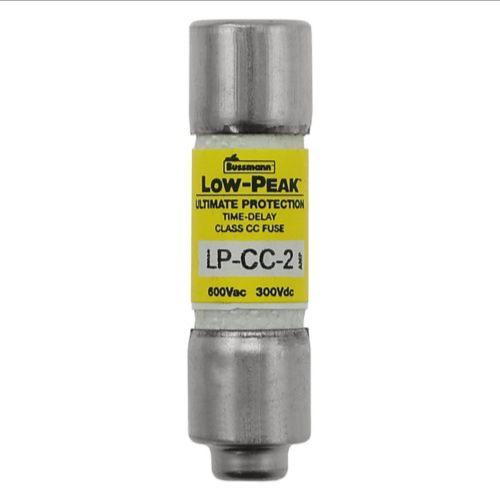
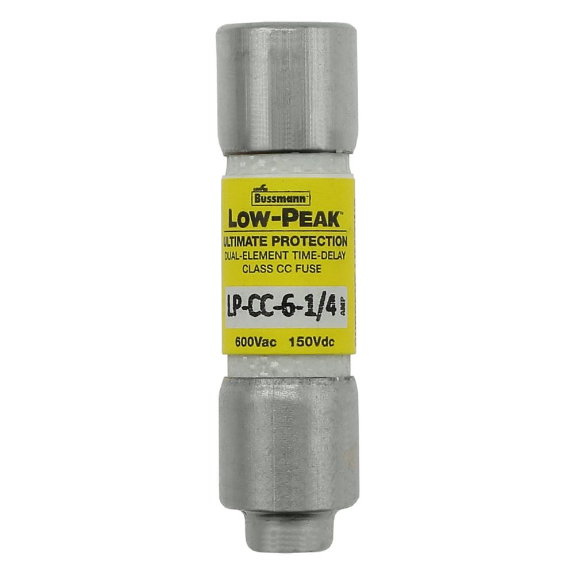
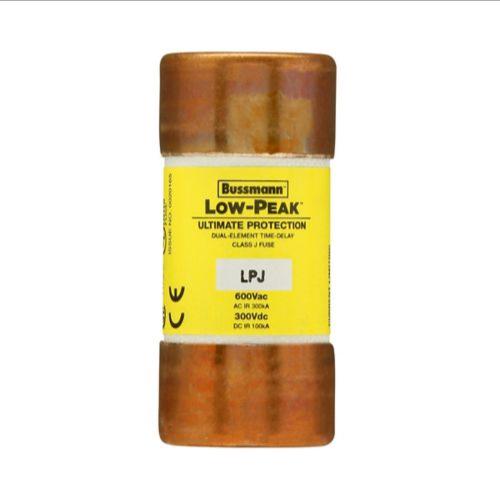
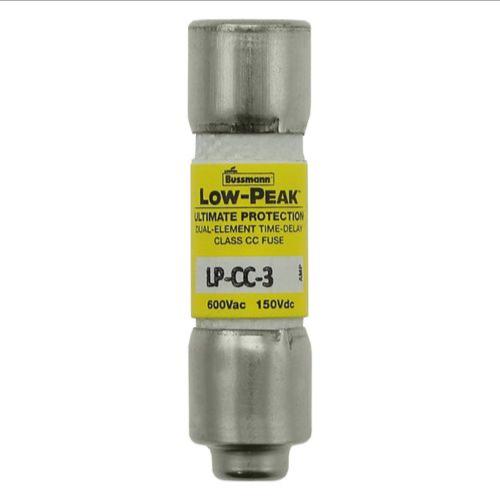
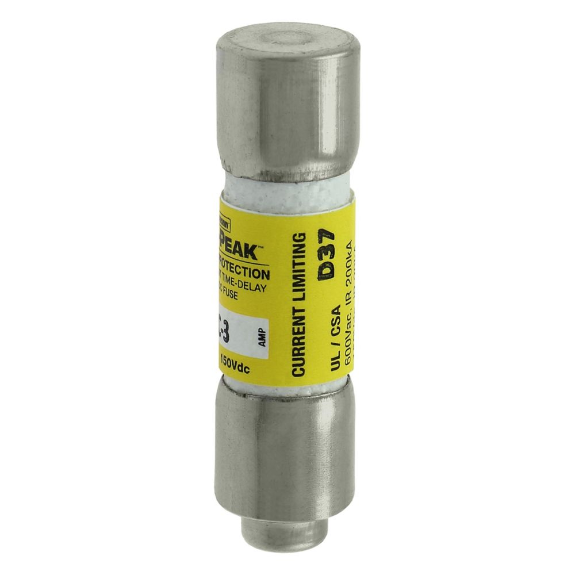
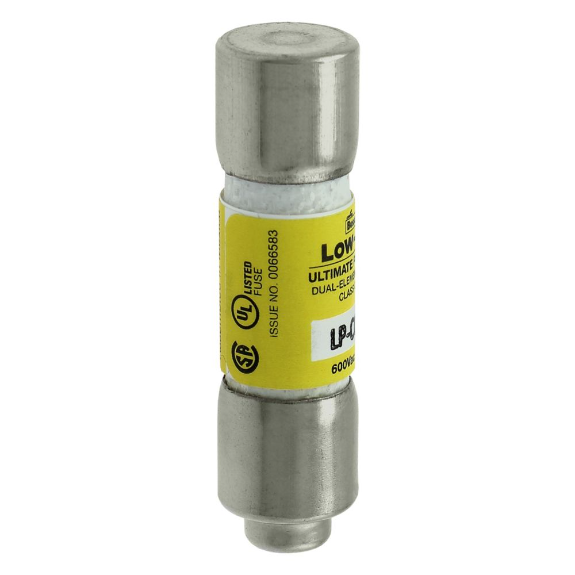
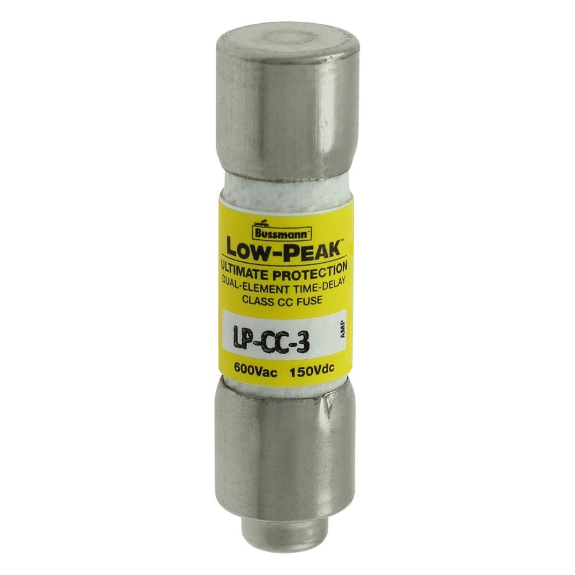
Bussmann LP-CC-3 fuse introduces a controlled delay between the occurrence of a triggering event and the response of the circuit it protects. It prevents unnecessary tripping or shutdowns caused by temporary electrical surges or transients.
| Height (cm) | 3.81 |
|---|---|
| Length (cm) | 1.04 |
| Width (cm) | 1.04 |
| HS Code | 8536100040 |
|---|---|
| Country Of Origin | MX |
| Weight (kg) | 0.0675 |



This Bussmann LP-CC-3 fuse has an interrupt rating of 200kAIC at 150VDC.
If a Low-Peak fuse is tripping unexpectedly, it could indicate an underlying problem, such as an increased load, short circuit or equipment malfunction.
A standard fuse responds immediately to overcurrents and will blow if the current exceeds its rating. In contrast, a time-delay fuse intentionally introduces a delay in its response, allowing it to tolerate temporary overcurrents without tripping.
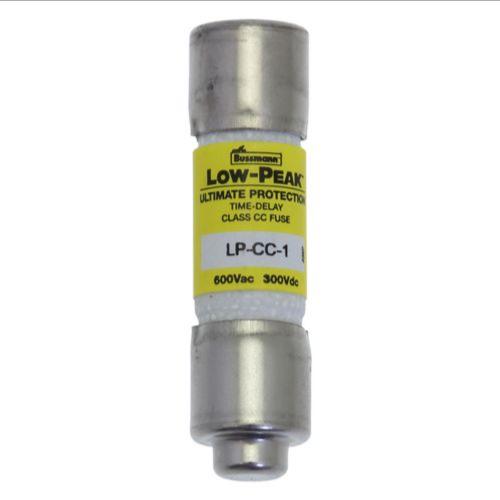

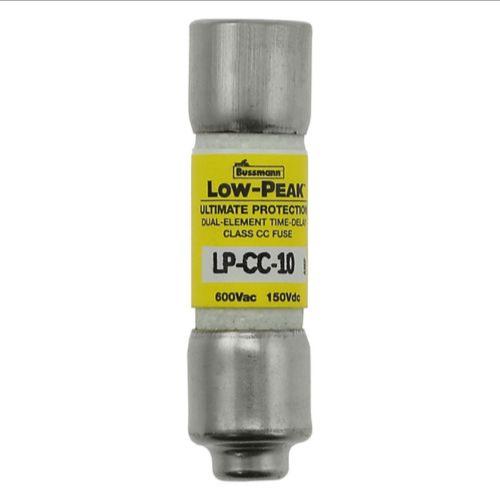
| Style | Model | Amps | Body Style | Dc Voltage Rating | Voltage | Diameter | Dc Voltage | Speed | Visual Indication | Price (ex. VAT) | Cart |
|---|---|---|---|---|---|---|---|---|---|---|---|
| A | LP-CC-1 | 1A | Cylindrical | 300V DC | 600V AC | 13/32" | 300V | Time Delay | Non Indicating | $21.57 | |
| B | LP-CC-1-1/4 | 1.25A | Cylindrical | 300V DC | 600V AC | 13/32" | - | Time Delay | Non Indicating | $22.23 | |
| B | LP-CC-1-1/8 | 1.125A | Cylindrical | 300V DC | 600V AC | 13/32" | - | Time Delay | Non Indicating | $22.23 | |
| B | LP-CC-1-4/10 | 1.4A | Cylindrical | 300V DC | 600V AC | 13/32" | - | Time Delay | Non Indicating | $22.23 | |
| B | LP-CC-1/2 | 1/2A | Cylindrical | 300V DC | 600V AC | 13/32" | - | Time Delay | Non Indicating | $22.23 | |
| C | LP-CC-10 | 10A | Cylindrical | 150V DC | 600V AC | 13/32" | 150V | Time Delay | Non Indicating | $20.98 | |
| B | LP-CC-12 | 12A | Cylindrical | 150V DC | 600V AC/150V DC | 13/32" | - | Time Delay | Non Indicating | $22.23 |
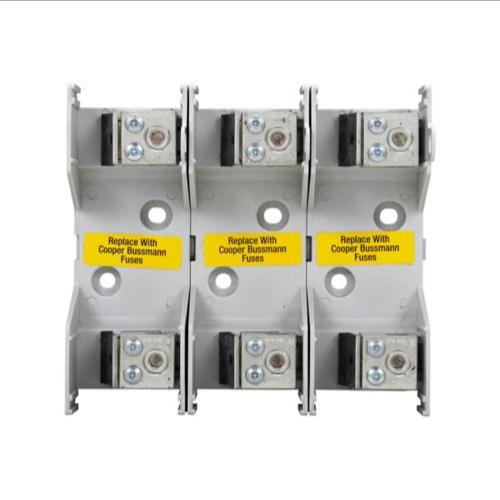
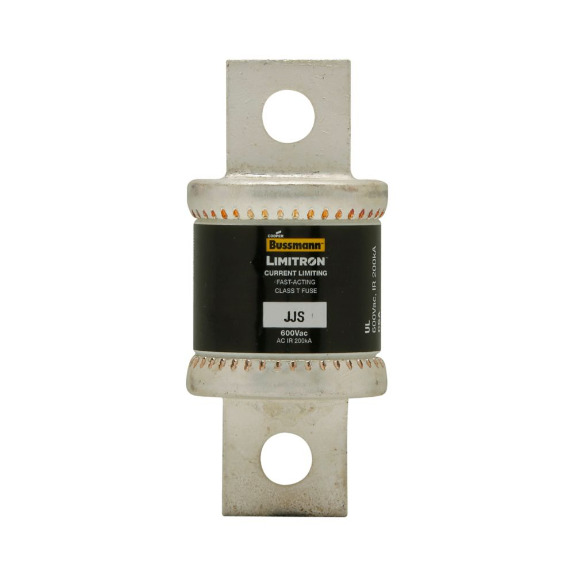
Since you're visiting from the United States, for the best experience and tailored product searches, please use our dedicated U.S. website.
Go to ChatMRO.com (US)

 ChatMRO