

Ships within 2 days via
We deliver to your doorstep under DAP terms. Customs clearance is for your account
Business customers can apply for Net 30
No fees, No interest, Fast approval.
Payment
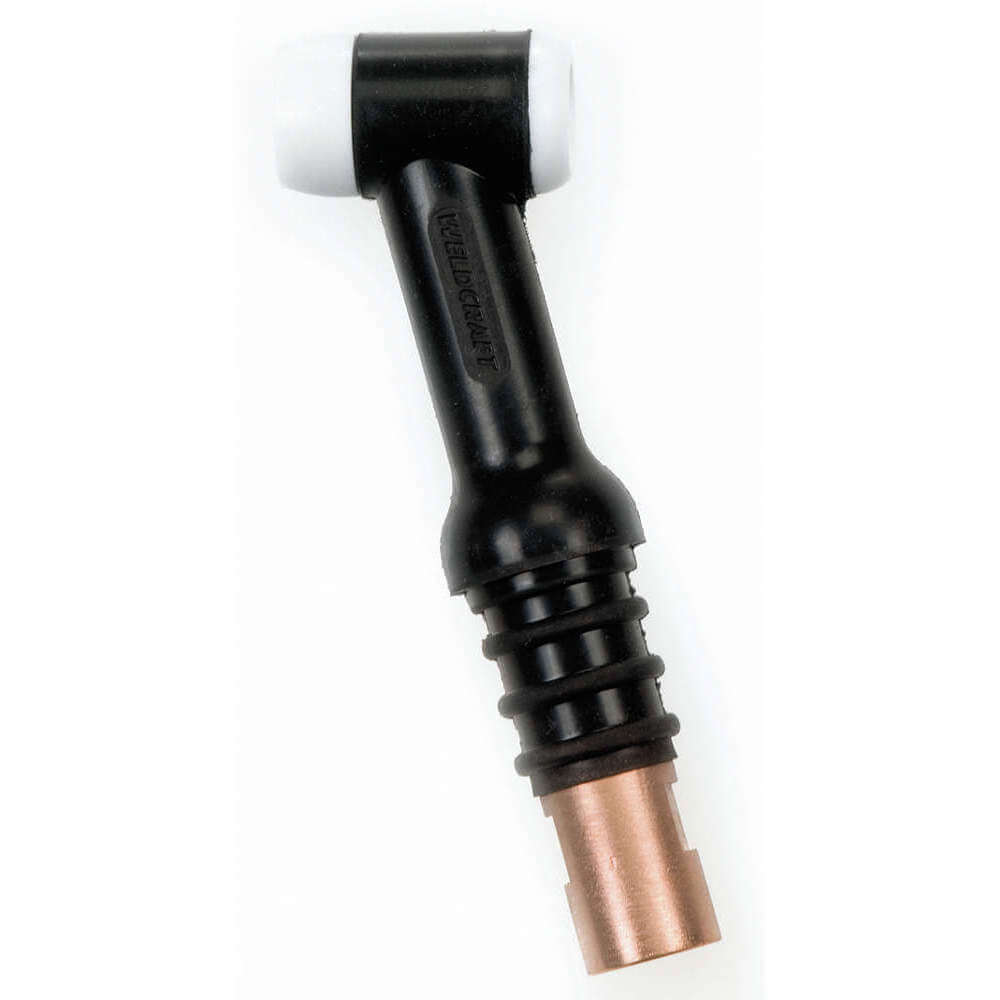
| Item | Air-Cooled Torch Body |
|---|---|
| Cooling Method | Air Cooled |
| Duty Cycle | 60% |
| For Maximum Electrode Diameter | 1/8" |
| For Minimum Electrode Diameter | 0.02" |
| Gas Valve | No |
| Maximum Amperage | 125A |
|---|---|
| Neck Type | Rigid |
| Output Range | 125/100A |
| Process | TIG Welding (GTAW) |
| Tig Torch Model | 9 |
| Tig Torch Series | A-125 |
Miller Weldcraft WP-9 air cooled torch body is designed to efficiently dissipate heat generated during the welding operation. This torch uses ambient air and shielding gas for cooling during TIG welding, eliminating the need for external water sources and hoses.
| Height (cm) | 6.6 |
|---|---|
| Length (cm) | 35.31 |
| Width (cm) | 34.54 |
| HS Code | 8515902000 |
|---|---|
| Country Of Origin | US |
| Weight (kg) | 1.6965 |
The primary difference between air-cooled and water-cooled TIG (Tungsten Inert Gas) torches lies in their cooling methods. Air-cooled torches dissipate heat using ambient air, making them lighter, more portable, and simpler to set up, but they are suitable for lower-amperage welding due to limited cooling capacity. In contrast, water-cooled torches use a water circulation system for enhanced heat dissipation, allowing them to handle higher amperages and longer welding durations, making them ideal for industrial applications but requiring additional equipment and maintenance due to the water-cooling system.
To clean the torch body, first disconnect it from the power source for safety. Next, employ a clean, dry cloth or compressed air to eliminate any dust or debris. If you encounter stubborn residues, consider lightly moistening the cloth with isopropyl alcohol for gentle cleaning. Be cautious not to use abrasive materials that may harm the torch's surface.
Routine maintenance involves a thorough examination of cables, connections, and hoses for any signs of wear or damage. It's crucial to promptly replace any worn components to uphold safety and performance standards. Furthermore, be diligent in checking for loose fittings and ensuring adequate insulation to mitigate the risk of electrical problems.




| Style | Model | Output Range | Gas Valve | Neck Type | Cooling Method | Duty Cycle | Process | For Minimum Electrode Diameter | Price (ex. VAT) | Cart |
|---|---|---|---|---|---|---|---|---|---|---|
| A | WP-17 | 150/115A | No | Rigid | Air Cooled | 60% | TIG Welding (GTAW) | 0.02" | $106.20 | |
| B | WP-17F | 150/115A | No | Flexible | Air Cooled | 60% | TIG Welding (GTAW) | 0.02" | $200.81 | |
| C | WP-17FV | 150/115A | Yes | Flexible | Air Cooled | 60% | TIG Welding (GTAW) | 0.02" | $257.00 | |
| D | WP-17V | 150/115A | Yes | Rigid | Air Cooled | 60% | TIG Welding (GTAW) | 0.02" | $162.26 | |
| E | WP-26 | 200/150A | No | Rigid | Air Cooled | 60% | TIG Welding (GTAW) | 0.02" | $115.40 | |
| F | WP-26FV | 200/150A | Yes | Flexible | Air Cooled | 60% | TIG Welding (GTAW) | 0.02" | $362.36 | |
| G | WP-26V | 200/150A | Yes | Rigid | Air Cooled | 60% | TIG Welding (GTAW) | 0.02" | $198.97 |
Since you're visiting from the United States, for the best experience and tailored product searches, please use our dedicated U.S. website.
Go to ChatMRO.com (US)

 ChatMRO