

Ships within 2 days via
We deliver to your doorstep under DAP terms. Customs clearance is for your account
Business customers can apply for Net 30
No fees, No interest, Fast approval.
Payment
| Item | Electromechanical Timer |
|---|---|
| Amps | 40A |
| Applicable Ac Voltage Ranges | 120V AC |
| Application | Lighting |
| Body Color | Gray |
| Body Material | Metal |
| Compatible Lighting | HID, LED |
| Contact Form | DPST |
| Contact Hp @ 120v | 2 hp |
| Contact Hp @ 240v | 5 hp |
| Current Rating | 40A |
| Day Skipper | No |
| Depth | 3" |
| Description/special Features | Furnished With A Maximum Of 1 Trippers, Manual On/Off Override Does Not Alter Program, Snap-Out Timing Mechanism, Up To 12 On/Off Settings Per Day |
| Display Qty | 1 |
| Enclosure Type | Steel |
| Features | Teeter Type Terminals |
| Finish | Enamel |
| Has Manual Override | Yes |
| Has Manual Override Cvl | Yes |
| Height | 7 13/16" |
| Horsepower @ 120v - Maximum | 2 hp |
| Horsepower @ 240v - Maximum | 5 hp |
| Indoor/outdoor | Indoor |
| Indoor/outdoor Usage | Indoor |
| Length | 7 4/5" |
| Max. On/off Cycles | 12 |
| Maximum Power Consumption | 3 W |
|---|---|
| Min. Time Setting | 1 hr. |
| Minimum On Off Time | 1 hr. |
| Minimum On/off Times | 1 hr. |
| Mounting | Hole Wall |
| Mounting Style | Surface |
| Nema Enclosure Rating | 1 |
| Number Of Circuits | 1 |
| Number Of Poles | 2 |
| Number Of Trippers - Maximum | 2 |
| Number Of Trippers Included | 2 |
| Operating Temperature - Maximum | 130°F |
| Operating Temperature - Minimum | -40°F |
| Overall Depth | 3 7/16" |
| Overall Height | 7 7/8" |
| Overall Width | 5 1/8" |
| Power Consumption Max W | 3 W |
| Product Type | Timer |
| Series | T100 Series |
| Skipper Wheel | Not Included |
| Skipper Wheel Operation Mode | Not Included |
| Time Setting - Max. | 24 hrs. |
| Time Setting - Maximum | 24 hrs. |
| Timing Interval | 1 hr. |
| Width | 5" |
| Wiring Option | Terminals |
| Standards | CCSAUS, CULUS |
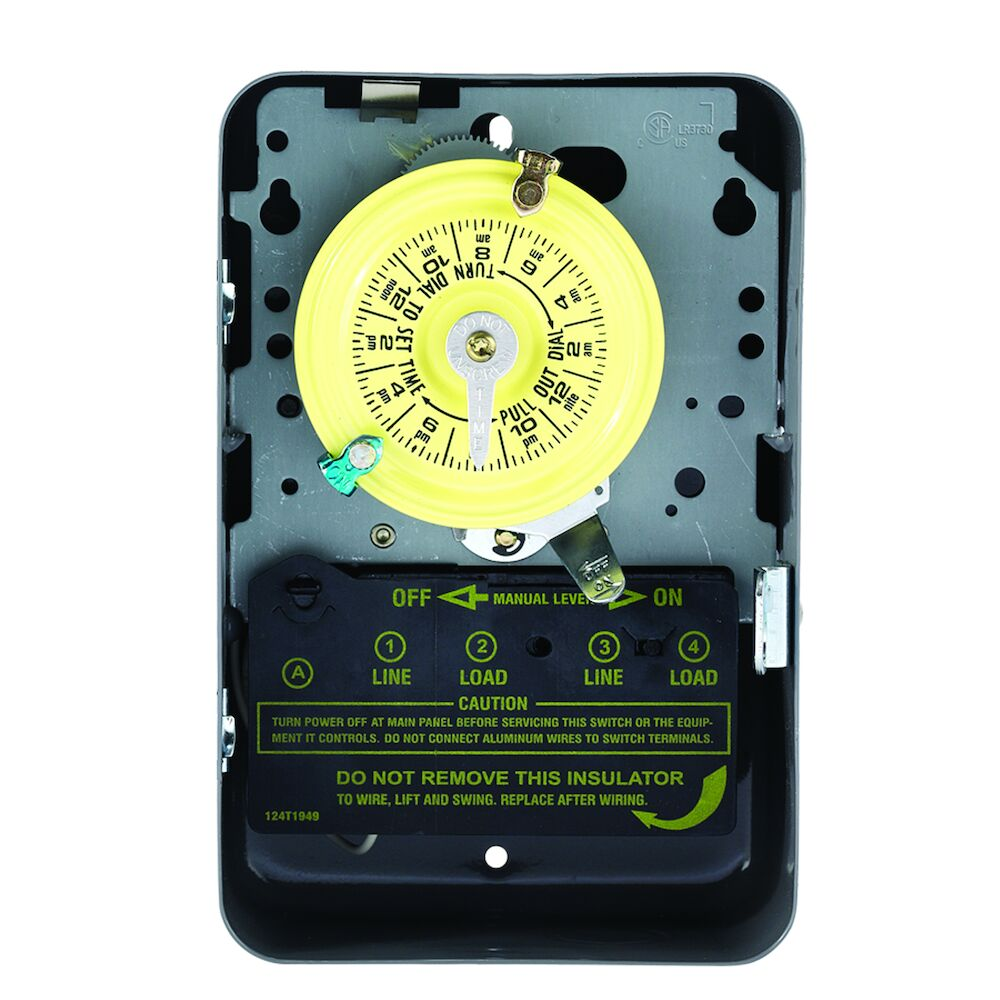
Intermatic T103 electromechanical timer automates the activation and deactivation of electrical circuits for controlling lighting, pumps, heaters and other equipment. By enabling users to pre-program ON / OFF schedules, it enhances energy efficiency, security and convenience.
| Height (cm) | 20 |
|---|---|
| Length (cm) | 8.73 |
| Width (cm) | 13.02 |
| HS Code | 9106905510 |
|---|---|
| Country Of Origin | MX |
| Weight (kg) | 1.2348 |
The average mechanical timer uses 1 Watt per hour which translates to 24 Watts daily. Typically, a digital timer uses a little bit more energy. About 2 Watts per hour of power are used here.
The three major types of PLC timers are on-delay, off-delay and retentive on-delay.
Both of them operate similarly and are capable of carrying out the same tasks. A mechanical timer is typically constructed as a massive, grey, metal box that may stand out significantly in your home's decor. Mechanical timers are typically larger, last longer and can take more electrical load than a digital timer.
Regularly check for proper alignment of trippers and keep the timer clean from dust and debris.
Yes, by automating lighting schedules, it helps save energy by preventing unnecessary usage during off-peak times.
The manual override allows immediate control of devices outside the programmed schedule without affecting the set program.
Yes, customers looking for electronic variants can choose from Intermatic SPST electronic timers having astronomic programming that offers sunset ON and sunrise OFF settings, eliminating the requirement for separate photo control devices.

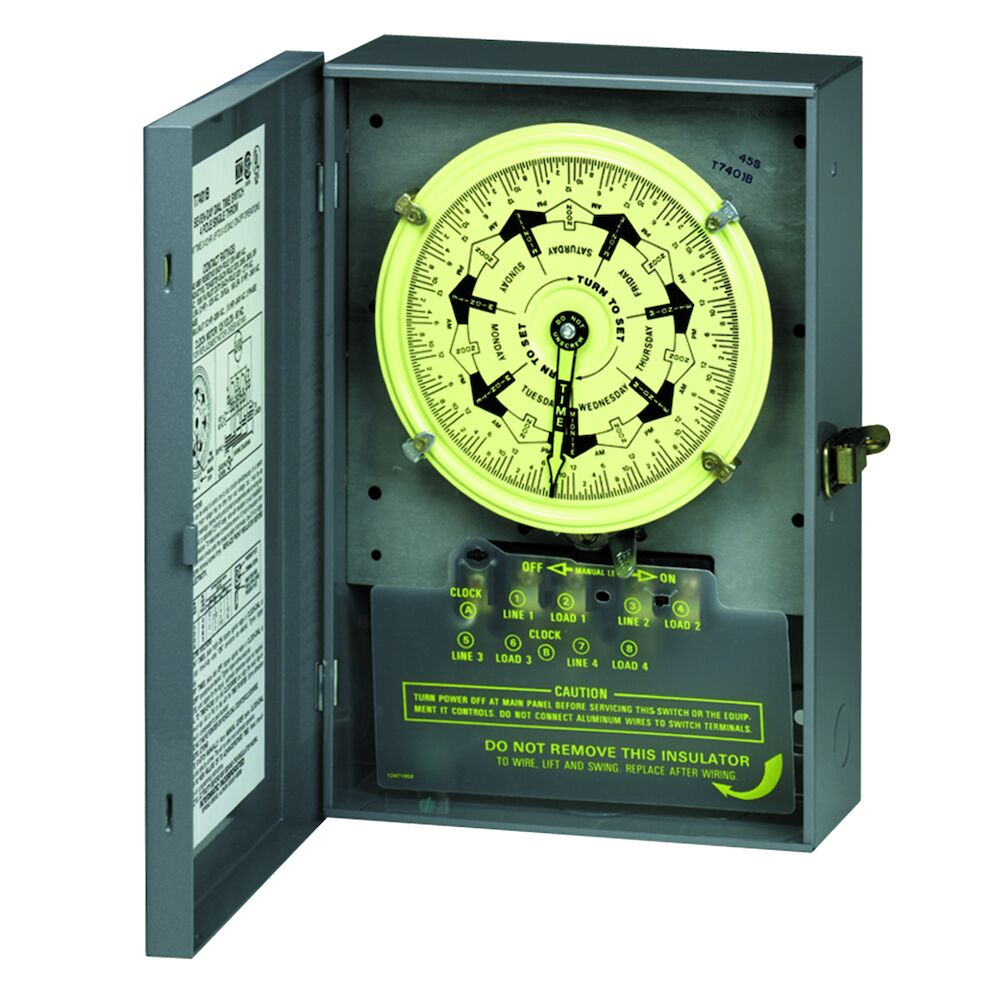
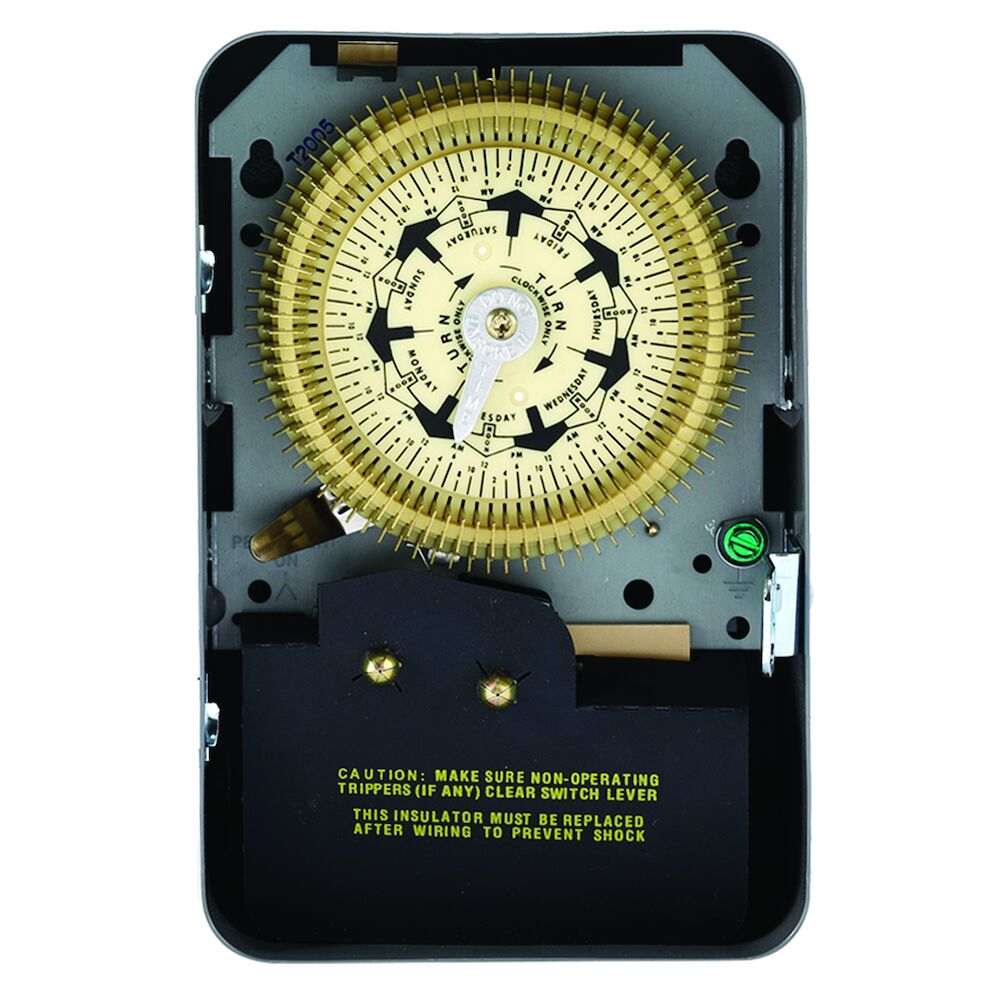

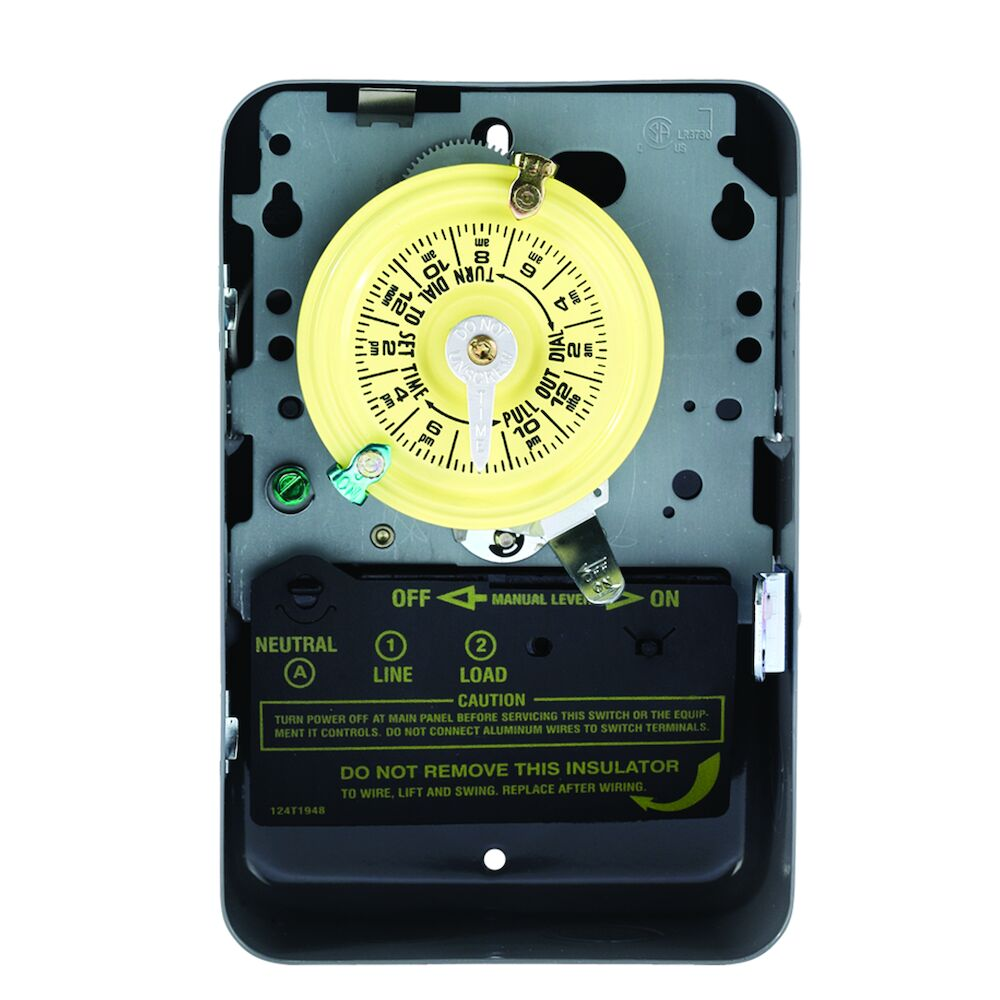


| Style | Model | Max. On/off Cycles | Min. Time Setting | Contact Form | Max. Time Setting | Enclosure Material | Depth | Number Of Poles | Number Of Trippers Included | Price (ex. VAT) | Cart |
|---|---|---|---|---|---|---|---|---|---|---|---|
| A | T7401B | 3 | 3.5 hrs. | SPST | 21 hrs. | - | 4" | 4 | 14 | $463.23 | |
| B | T7401BC | 3 | 3.5 hrs. | SPST | 21 hrs. | - | 4" | 4 | 14 | $1,365.20 | |
| C | T2005 | 6 | - | SPDT | 22 hrs. | - | 3" | 1 | 84 | $473.27 | |
| D | T1905E | 48 | 15 min. | SPDT | 23.75 hrs. | - | 3" | 1 | 96 | $304.90 | |
| E | T101 | 12 | 1 hr. | SPST | - | - | 3" | 1 | 2 | $163.50 | |
| F | T171 | 12 | 1 hr. | SPST | - | - | 3" | 1 | 2 | $275.37 | |
| G | T1905 | 48 | 15 min. | SPDT | 23.75 hrs. | - | 3" | 1 | 96 | $328.90 |
Since you're visiting from the United States, for the best experience and tailored product searches, please use our dedicated U.S. website.
Go to ChatMRO.com (US)

 ChatMRO